Stavros Xarchakos is one of the most important Greek composers, with international recognition and a huge impact on every generation of Greeks. His many years of contribution to Greek music include both charming compositions and songs that marked the 20th century, as well as rich classical works.
Stavros Xarchakos was born on 14 March 1939, in the centre of Athens, where he still lives today. He comes from the Laconian Mani. Growing up in a neighbourhood of the capital, where the arts flourished, he came into contact with folk and rebetiko singing, as well as European music, which was heard on the radio, while he was strongly influenced by church music. He also received musical stimulation from his grandmother, who played the guitar and sang arias from operas and cantatas with him. From an early age he showed an interest in music and attended cello and piano lessons.
In 1958 he entered the Athens Conservatory, where he made his first studies in music. In 1968, while he was at a particularly productive time in his career, seeking to develop his music and broaden his knowledge, he decided to study music and composition in Paris, as a student of the leading French musicologist and pedagogue Nadia Boulanger, until 1973.
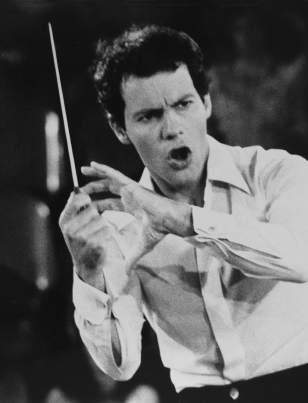
In 1978, wishing to study the technique of classical music and immerse himself in harmony, composition and conducting, he decided to continue his studies at the Juilliard School in New York, at the encouragement of Leonard Bernstein, with whom he had been corresponding, after being introduced to him by Kimon Friar, an internationally renowned academic and translator of Nikos Kazantzakis’ work. At the Juliard School he studied with composer David Diamond for three years. Next to Bernstein he studied score analysis for two years and conducted many concerts. An indicative example is the concert held in New York, in which he conducted the city’s Symphony Orchestra.
His career
1967
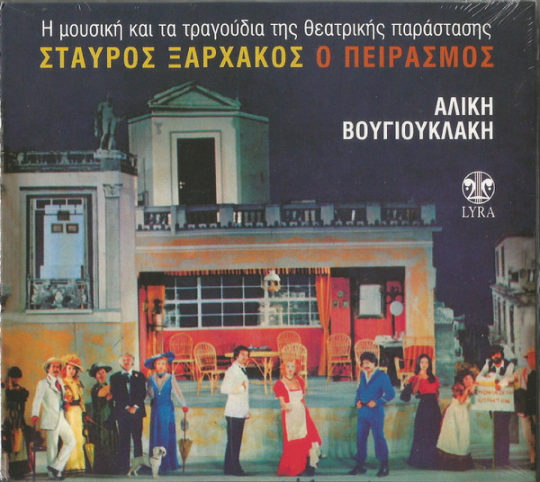
In 1974 the album “Nyn kai ai” was released, performed by Vicky Moscholiou and Nikos Dimitratos, and “Collection”, performed by Nikos Xylouris. In 1976 he composed the music for the performance “The Temptation” by Grigoris Xenopoulos, with the album of the same name being released the following year with the leading actress of the play, Aliki Vougiouklaki, as the performer.
Furthermore, driven by his love and interest in classical music, apart from folk and art music, he has composed works for symphony orchestra, among which the symphonic poem “Kyra-Panagia” of 1969, the “Piano Concerto” of 1971, the “Eddopsis” of 1979 for baritone and orchestra, to the poetry of George Seferis, and the orchestral suite “Memories” of 1982 stand out.
Folk singing evolves through the decades and is gradually recognized by the so-called bourgeoisie – Laos and Kolonaki – with composers such as Vassilis Tsitsanis, Manolis Chiotis and Giorgos Zambetas creating songs that remain as popular as they were when they were written. At the same time, light singing, with Mimis Plessas and Yannis Spanos as leading representatives, gradually evolves into pop. Since the late 60s, Greek music accepts its influences from the West, we have the birth of Greek pop and Greek rock.
Folk singing evolves through the decades and is gradually recognized by the so-called bourgeoisie – Laos and Kolonaki – with composers such as Vassilis Tsitsanis, Manolis Chiotis and Giorgos Zambetas creating songs that remain as popular as they were when they were written. At the same time, light singing, with Mimis Plessas and Yannis Spanos as leading representatives, gradually evolves into pop. Since the late 60s, Greek music accepts its influences from the West, we have the birth of Greek pop and Greek rock.
Folk singing evolves through the decades and is gradually recognized by the so-called bourgeoisie – Laos and Kolonaki – with composers such as Vassilis Tsitsanis, Manolis Chiotis and Giorgos Zambetas creating songs that remain as popular as they were when they were written. At the same time, light singing, with Mimis Plessas and Yannis Spanos as leading representatives, gradually evolves into pop. Since the late 60s, Greek music accepts its influences from the West, we have the birth of Greek pop and Greek rock.
Folk singing evolves through the decades and is gradually recognized by the so-called bourgeoisie – Laos and Kolonaki – with composers such as Vassilis Tsitsanis, Manolis Chiotis and Giorgos Zambetas creating songs that remain as popular as they were when they were written. At the same time, light singing, with Mimis Plessas and Yannis Spanos as leading representatives, gradually evolves into pop. Since the late 60s, Greek music accepts its influences from the West, we have the birth of Greek pop and Greek rock.
Folk singing evolves through the decades and is gradually recognized by the so-called bourgeoisie – Laos and Kolonaki – with composers such as Vassilis Tsitsanis, Manolis Chiotis and Giorgos Zambetas creating songs that remain as popular as they were when they were written. At the same time, light singing, with Mimis Plessas and Yannis Spanos as leading representatives, gradually evolves into pop. Since the late 60s, Greek music accepts its influences from the West, we have the birth of Greek pop and Greek rock.
Folk singing evolves through the decades and is gradually recognized by the so-called bourgeoisie – Laos and Kolonaki – with composers such as Vassilis Tsitsanis, Manolis Chiotis and Giorgos Zambetas creating songs that remain as popular as they were when they were written. At the same time, light singing, with Mimis Plessas and Yannis Spanos as leading representatives, gradually evolves into pop. Since the late 60s, Greek music accepts its influences from the West, we have the birth of Greek pop and Greek rock.
Folk singing evolves through the decades and is gradually recognized by the so-called bourgeoisie – Laos and Kolonaki – with composers such as Vassilis Tsitsanis, Manolis Chiotis and Giorgos Zambetas creating songs that remain as popular as they were when they were written. At the same time, light singing, with Mimis Plessas and Yannis Spanos as leading representatives, gradually evolves into pop. Since the late 60s, Greek music accepts its influences from the West, we have the birth of Greek pop and Greek rock.
Folk singing evolves through the decades and is gradually recognized by the so-called bourgeoisie – Laos and Kolonaki – with composers such as Vassilis Tsitsanis, Manolis Chiotis and Giorgos Zambetas creating songs that remain as popular as they were when they were written. At the same time, light singing, with Mimis Plessas and Yannis Spanos as leading representatives, gradually evolves into pop. Since the late 60s, Greek music accepts its influences from the West, we have the birth of Greek pop and Greek rock.
Folk singing evolves through the decades and is gradually recognized by the so-called bourgeoisie – Laos and Kolonaki – with composers such as Vassilis Tsitsanis, Manolis Chiotis and Giorgos Zambetas creating songs that remain as popular as they were when they were written. At the same time, light singing, with Mimis Plessas and Yannis Spanos as leading representatives, gradually evolves into pop. Since the late 60s, Greek music accepts its influences from the West, we have the birth of Greek pop and Greek rock.
Folk singing evolves through the decades and is gradually recognized by the so-called bourgeoisie – Laos and Kolonaki – with composers such as Vassilis Tsitsanis, Manolis Chiotis and Giorgos Zambetas creating songs that remain as popular as they were when they were written. At the same time, light singing, with Mimis Plessas and Yannis Spanos as leading representatives, gradually evolves into pop. Since the late 60s, Greek music accepts its influences from the West, we have the birth of Greek pop and Greek rock.
Folk singing evolves through the decades and is gradually recognized by the so-called bourgeoisie – Laos and Kolonaki – with composers such as Vassilis Tsitsanis, Manolis Chiotis and Giorgos Zambetas creating songs that remain as popular as they were when they were written. At the same time, light singing, with Mimis Plessas and Yannis Spanos as leading representatives, gradually evolves into pop. Since the late 60s, Greek music accepts its influences from the West, we have the birth of Greek pop and Greek rock.
Folk singing evolves through the decades and is gradually recognized by the so-called bourgeoisie – Laos and Kolonaki – with composers such as Vassilis Tsitsanis, Manolis Chiotis and Giorgos Zambetas creating songs that remain as popular as they were when they were written. At the same time, light singing, with Mimis Plessas and Yannis Spanos as leading representatives, gradually evolves into pop. Since the late 60s, Greek music accepts its influences from the West, we have the birth of Greek pop and Greek rock.
Folk singing evolves through the decades and is gradually recognized by the so-called bourgeoisie – Laos and Kolonaki – with composers such as Vassilis Tsitsanis, Manolis Chiotis and Giorgos Zambetas creating songs that remain as popular as they were when they were written. At the same time, light singing, with Mimis Plessas and Yannis Spanos as leading representatives, gradually evolves into pop. Since the late 60s, Greek music accepts its influences from the West, we have the birth of Greek pop and Greek rock.
Folk singing evolves through the decades and is gradually recognized by the so-called bourgeoisie – Laos and Kolonaki – with composers such as Vassilis Tsitsanis, Manolis Chiotis and Giorgos Zambetas creating songs that remain as popular as they were when they were written. At the same time, light singing, with Mimis Plessas and Yannis Spanos as leading representatives, gradually evolves into pop. Since the late 60s, Greek music accepts its influences from the West, we have the birth of Greek pop and Greek rock.
Folk singing evolves through the decades and is gradually recognized by the so-called bourgeoisie – Laos and Kolonaki – with composers such as Vassilis Tsitsanis, Manolis Chiotis and Giorgos Zambetas creating songs that remain as popular as they were when they were written. At the same time, light singing, with Mimis Plessas and Yannis Spanos as leading representatives, gradually evolves into pop. Since the late 60s, Greek music accepts its influences from the West, we have the birth of Greek pop and Greek rock.
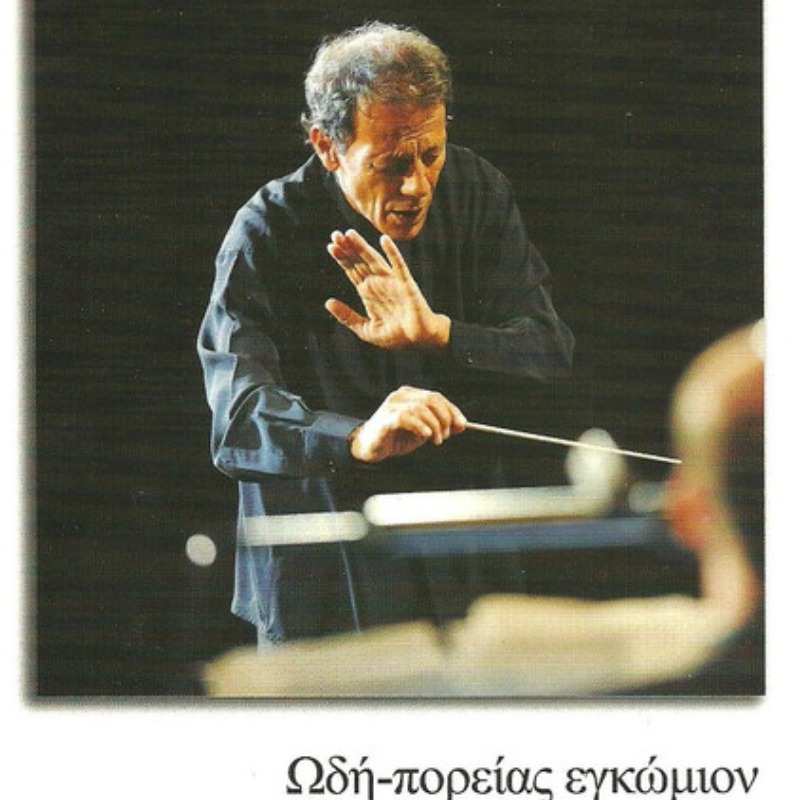
His presence is intense and in a creative manner and mood, he approaches Greek music by preparing performances, which are presented all over the country, in festivals, archaeological monuments, emblematic theatres and places of historical value and importance. Through their conduct, it seeks to promote and highlight the Greek song and the Greek musical tradition and to contribute to their development.
He has made many arrangements of his own songs, especially when they are presented in concerts and performances, and he has arranged other top composers’ songs, in order to approach them from his own perspective, to bring out their identity and scope and to give them a new breath.
Together with Manos Hadjidakis and Mikis Theodorakis, he is considered the trio of the top Greek composers who created and established the “art folk” song, enriching its repertoire with popular songs and orchestral works.
He has been awarded many times in film and music festivals, such as the Thessaloniki Film Festival. In May 1994 he was awarded a Doctor of Fine Arts degree from Adelphi University in New York. At the beginning of 1995 he took over the artistic direction of the “State Orchestra of Greek Music” (KOEM). In December 2019 he was awarded an honorary doctorate in the Department of Music Studies at the Faculty of Philosophy of the University of Athens.
In politics, he served as a councillor in the Municipality of Athens and deputy mayor of cultural affairs. He also served as a member of the Athens A’ Parliament and as a member of the European Parliament (2000-2004).